
PEEK Gasket (Polyether Ether Ketone)
order PEEK GasketContact Us:+98 21 8817 5113
For pricing and order placement, please provide the flange dimensions, process media, operating temperature and pressure. Our technical team will recommend the optimal size, thickness and grade of PEEK gasket for your application. Custom and standard dimensions are available upon request.

PEEK Gasket | High-Performance Sealing Solution for Extreme Temperature & Pressure
A PEEK gasket is a high-performance sealing component engineered from Polyether Ether Ketone (PEEK)—a semi-crystalline, ultra-strong engineering polymer designed for extreme temperature, pressure, and mechanical load conditions.
This material is selected when conventional PTFE-based gaskets (including reinforced grades) cannot provide sufficient thermal resistance, dimensional stability, or mechanical strength for demanding service environments.
Thanks to its semi-crystalline molecular structure, PEEK maintains exceptional stability at elevated temperatures and under continuous mechanical stress, making it an excellent choice for sealing applications in highly sensitive process equipment.
For sizing guidance and to obtain a quotation for PEEK gaskets, you can provide your operating fluid, pressure range, temperature profile, and flange specifications to our technical team.

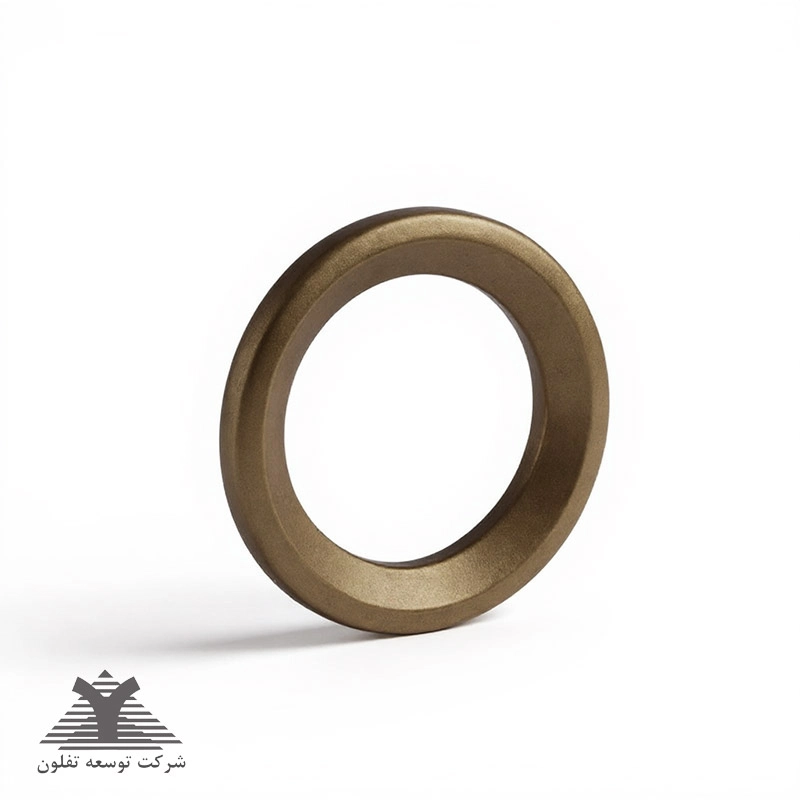
In applications involving temperatures approaching 260 °C, high system pressures, thermal shock, and continuous duty cycles, a PEEK gasket ensures long-term sealing integrity.
Typical use cases include:
High-temperature reactors
Steam and thermal-oil systems
Advanced chemical-processing units
Specialized service conditions in oil, gas, and petrochemical operations
These are environments where gasket material selection directly impacts safety, process stability, and the reduction of unplanned downtime.
Key Technical Specifications of PEEK Gaskets
-
• Base Material:
Manufactured from high-performance Polyether Ether Ketone (PEEK), an engineering thermoplastic known for its exceptional mechanical and thermal properties. -
• Semi-Crystalline Structure:
PEEK’s semi-crystalline morphology provides high mechanical strength, superior rigidity, and excellent thermal stability, enabling reliable performance in demanding industrial service. -
• High Temperature Capability:
Engineered for sustained operation at elevated temperatures—typically up to 250–260 °C in most engineering applications—while maintaining structural integrity under load. -
• Outstanding Dimensional Stability Under Load:
Exhibits minimal deformation and controlled creep under high pressure and continuous compressive stress, outperforming conventional PTFE-based gaskets.
-
• Higher Modulus and Stiffness vs. PTFE Grades:
Delivers significantly greater elastic modulus and compressive strength, making it suitable for flanges and assemblies subjected to heavy bolt loads. -
• Superior Resistance to Thermal Aging & Radiation:
Compared to many engineering polymers, PEEK offers enhanced resistance to thermal oxidation, radiation exposure, and long-term degradation, ensuring reliability in extended service cycles.
-
• Chemical Compatibility:
Provides broad resistance to process media, high-temperature oils, steam, and many industrial chemicals—though final compatibility should be confirmed based on specific media.
-
• Low Thermal Expansion Coefficient:
Displays a lower coefficient of thermal expansion (CTE) than most polymers, helping the gasket maintain its shape and sealing performance during thermal fluctuations. -
• Electrical Insulation Properties:
Features excellent dielectric strength and electrical stability, allowing use in combined mechanical–electrical industrial applications. -
• Precision Machinability:
Can be machined with tight tolerances to produce standard or custom gasket geometries, including complex sealing profiles. -
• Typical Appearance:
Industrial PEEK components are commonly cream to light brown in color, aiding material identification during inspection and maintenance.
Advantages & Limitations of PEEK Gaskets in High-Temperature, High-Pressure Service
Virgin/Composite PEEK gaskets enter the design stage when conventional PTFE grades can no longer satisfy the mechanical, thermal, or dimensional-stability requirements of the system.
Advantages — Why Engineers Specify PEEK Gaskets
● Minimizes leak risk in severe-service environments with environmental, operational, or personnel-safety impact
● Enables higher integrity sealing when combined with engineered flange design and proper bolt-load control
Limitations — When a PEEK Gasket May Not Be the Right Choice
Position of PEEK Gaskets Within Advanced Sealing Material Grades
PEEK gaskets occupy a higher tier in the sealing-material hierarchy, positioned alongside premium PTFE composites and engineered tribological compounds — yet their role is distinctly different.
The comparison matrix below evaluates PEEK against other high-performance gasket materials based on technology level, operating-temperature capability, risk profile, expected service life, and investment requirements — helping engineers determine when PEEK is truly justified, and when other grades deliver sufficient performance.
| Gasket Material Type | Technology Level & Material Complexity | Typical Design Temperature Range | Primary Risk Mitigated | Expected Service-Life Horizon | Relative Investment Level | Engineering Interpretation of Use Case |
|---|---|---|---|---|---|---|
| Virgin PTFE | Fundamental, purity-focused polymer with excellent chemical inertia | Moderate to relatively high temperatures in corrosive service | Chemical reaction risk and contamination control in sensitive process media | Moderate, assuming flange loads and system pressure remain within standard limits | Medium | First-choice material where chemical resistance and media purity outweigh mechanical load requirements |
| 25% Glass-Filled PTFE Gasket | Intermediate-grade PTFE engineered for increased stiffness and dimensional stability | Standard industrial temperatures with steady, continuous flange load | Reduced creep, minimized cold-flow and prevention of long-term deformation under load | Longer than virgin PTFE in sustained-load applications | Medium to high cost | Ideal for flanges that are tightened once and expected to operate for extended periods without re-torquing |
| 40% Bronze-Filled PTFE Gasket | Engineered composite PTFE designed for high mechanical load and elevated bolt torque | Typical process temperatures combined with high system pressure | Prevents leak pathways caused by gasket compression, crushing or cold-flow under heavy bolt load | Long-term performance in high-pressure, continuous-duty environments | High cost | Preferred choice for oil, gas and high-pressure hydraulic systems where leakage cannot be tolerated |
| Bronze + MoS₂ Filled PTFE Gasket | Specialized composite engineered for extreme pressure, high wear and continuous dynamic loading | Elevated industrial temperatures combined with vibration, sliding motion and cyclic loading | Simultaneous control of wear, vibration-induced leakage and creep deformation | Very long-term reliability in critical rotating or high-load system locations | High | Preferred for sealing points in rotating equipment and ultra-heavy hydraulic systems where durability is mission-critical |
| Carbon-Fiber + MoS₂ Filled PTFE Gasket | Advanced tribological composite engineered for extreme wear and continuous sliding motion | High industrial temperatures combined with ongoing motion, friction and cyclic load | Mitigates galling, accelerated wear, stick–slip behavior and localized heat buildup | Very long-term durability in specialized dynamic-service environments | Very high | Ideal where high pressure, continuous relative motion and critical operational reliability must coexist |
| PEEK Gasket | High-end engineered polymer designed for mission-critical, severe-service sealing | Very high operating temperatures combined with elevated pressure and mechanical stress | Prevents seal failure at the thermal–mechanical design limits of the equipment | Long-term, strategic service life intended for high-value, high-risk equipment | Premium (High Investment) | Selected when the sealing point is so critical that leaks or downtime would result in major safety, environmental or financial impact — and when other grades can’t provide adequate safety margin |
Industrial Applications of PEEK Gaskets in High-Temperature and High-Pressure Service
A PEEK gasket is typically selected when the sealing point operates close to the upper design limits of temperature and pressure — situations where gasket failure can lead to unit downtime, safety risks, or significant financial consequences. In such conditions, PEEK serves as a high-performance material that ensures long-term dimensional stability and reliable sealing performance.
High-Temperature Reactors and Process Equipment
Suitable for sealing flanges and connections on reactors operating at elevated temperatures and continuous thermal cycles.
Steam and Thermal-Oil Systems
Used on flanges and joints exposed to steam or thermal oil at temperatures approaching the upper operating limits of the system.
Chemical Processing Units with Combined High Temperature and Pressure
Ideal for process lines where high temperatures, elevated pressures, and chemically active media are present simultaneously.
Critical Service Points in Oil, Gas, and Petrochemical Operations
Applied in high-risk sealing locations within oil & gas units where system design targets minimal leakage and zero unplanned shutdowns.
Specialized Equipment in Power Generation and Energy Industries
Used in high-temperature joints on turbines, boilers, and thermal-energy transfer equipment operating under severe service conditions.
Sealing Points with Difficult Access and High Maintenance Costs
Recommended for locations where gasket replacement is difficult or costly, and long service life is significantly more valuable than frequent maintenance.
Frequently Asked Questions About PEEK Gaskets
A PEEK gasket is manufactured from polyether-ether-ketone (PEEK), not PTFE. Compared with standard PTFE grades, PEEK offers substantially higher mechanical strength, far superior dimensional stability, and the ability to operate at elevated temperatures and under simultaneous thermal and mechanical stress. While PTFE is primarily chosen for its chemical inertness and moderate high-temperature capability, PEEK is engineered for service conditions where temperature, pressure, and mechanical loading are all at critical levels and a wider safety margin for sealing performance is required.
A PEEK gasket is recommended when the sealing point must operate under very high temperatures, significant internal pressure, and continuous or critical service. Typical applications include high-temperature reactors, steam and thermal-oil systems, specialized lines in oil & gas and petrochemical units, and advanced chemical-processing equipment. If gasket failure at a specific location could lead to substantial unit downtime, safety consequences, or major financial loss, evaluating a PEEK gasket becomes a technically justified decision.
PEEK demonstrates excellent resistance to many process fluids, high-temperature oils, steam, and a range of chemical environments. However, like any engineering material, it also has specific chemical limitations. Therefore, fluid composition, temperature, pressure, and service conditions must be reviewed carefully before selecting a PEEK gasket. In certain environments, high-performance filled PTFE grades or other composite gasket materials may offer better chemical compatibility.

