
Molybdenum-Bronze PTFE Gasket
Order Bronze–Molybdenum PTFE GasketContact Us: +98 21 8817 5113
For pricing and order placement, please provide the flange dimensions, process media, operating temperature and pressure. Our technical team will recommend the optimal size and thickness of the bronze–molybdenum PTFE gasket based on your operating conditions. Custom and standard dimensions are available upon request.

Molybdenum-Bronze Filled PTFE Gasket | Engineered for Extreme Pressure and High Wear Conditions
Bronze–molybdenum filled PTFE represents an advanced generation of industrial PTFE gaskets engineered for severe service conditions—where high pressure, significant wear, and dynamic motion occur simultaneously. The PTFE matrix is reinforced with bronze particles and molybdenum disulfide (MoS₂), increasing compressive strength and dimensional stability while substantially reducing the friction coefficient.
This engineered blend delivers a gasket capable of long-term, reliable sealing in high-pressure hydraulic systems, high-temperature process equipment, critical flanges, and connections exposed to continuous abrasion, all while retaining many of the inherent advantages of PTFE-based materials.
To obtain an accurate quotation and place an order, please provide the flange dimensions, fluid type, operating temperature, and system pressure. Based on your process conditions, our technical team will recommend the optimal gasket size and thickness. Production is available in standard dimensions and fully customized sizes.
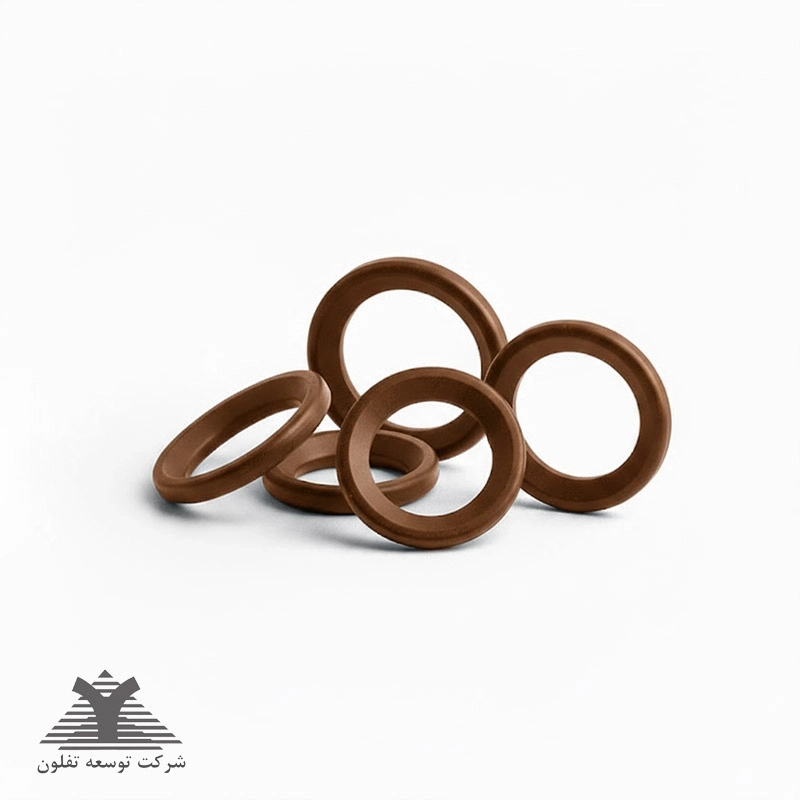
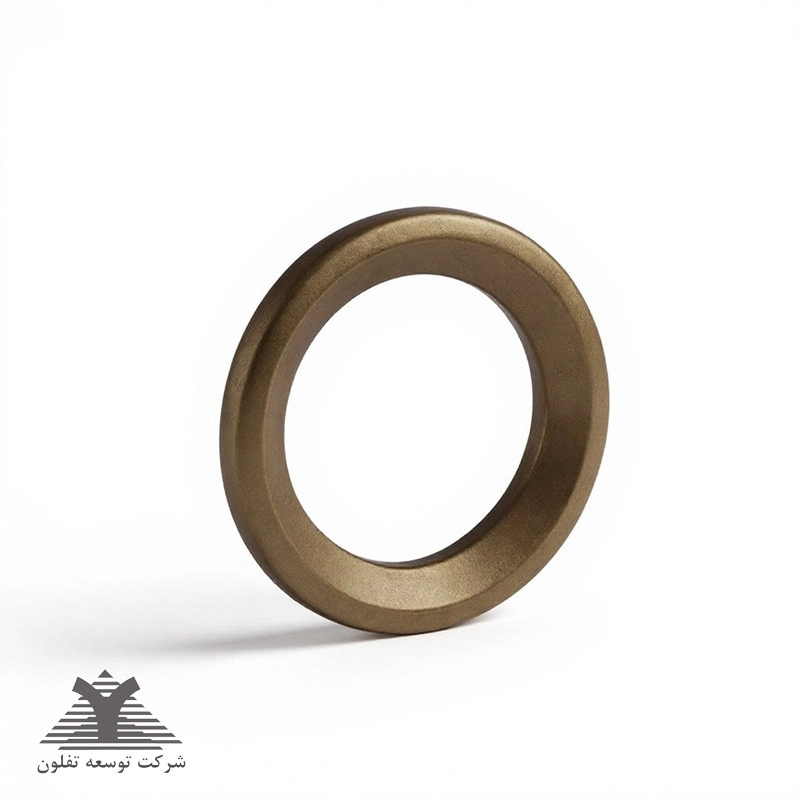
Bronze–molybdenum filled PTFE gaskets are selected when pure PTFE no longer meets the required pressure, wear, or mechanical load demands. The combination of bronze and molybdenum disulfide (MoS₂) enhances thermal conductivity—helping to prevent localized hot spots—while significantly reducing friction and extending sealing life in dynamic applications.
For this reason, bronze–molybdenum PTFE is considered one of the most reliable engineered choices for high-pressure flanges, heavy-duty hydraulic systems, rotating equipment, and high-temperature process lines where leakage or downtime can be costly.
Key Technical Specifications of Bronze–Molybdenum Filled PTFE Gaskets for Severe Service Conditions
-
Engineered Material Composition:
PTFE matrix reinforced with high bronze content and controlled MoS₂ levels, providing a balanced combination of strength and solid lubrication. -
Designed for High-Pressure Operation:
Suitable for high-pressure flanges and hydraulic systems where pure PTFE lacks sufficient load-bearing strength.
-
Exceptional Creep and Deformation Resistance:
Maintains dimensional stability under continuous mechanical load with minimal long-term creep.
-
Outstanding Wear Resistance for Dynamic Applications:
Engineered for connections exposed to vibration, sliding, and continuous motion.
-
Low Friction Coefficient Enabled by MoS₂:
MoS₂ acts as a solid lubricant, reducing friction and preventing heat buildup and premature wear.
-
Improved Thermal Conductivity Compared to Pure PTFE:
Bronze particles enhance heat transfer, reducing hot spots under pressure.
-
Wide Operating Temperature Range:
Delivers stable performance in standard PTFE temperature limits, with improved tolerance for short-term high-temperature exposure depending on system design.
-
Good Chemical Resistance Across Common Industrial Media:
Compatible with oils, gases, hydraulic fluids, and many process chemicals; selection based on fluid aggressiveness is recommended.
-
Suitable for Static and Semi-Dynamic Systems:
Ideal for high-pressure flanges, vibrating connections, pumps, compressors, and rotating equipment.
- Custom Machining Capability: Available in standard and custom-machined sizes based on drawings, samples, or project specifications.
Advantages and Limitations of Bronze–Molybdenum Filled PTFE Gaskets
The use of bronze–molybdenum filled PTFE gaskets is typically considered when both pressure and temperature are high, and when significant wear or dynamic motion is present—conditions where pure PTFE is no longer adequate. While this grade retains a portion of PTFE’s chemical resistance, it delivers substantially higher mechanical strength, wear resistance, and pressure tolerance.
Understanding these advantages and limitations is essential to determining whether this engineered material is the right choice for your application or if an alternative PTFE grade should be considered.
Advantages
Limitations
When Is Bronze–Molybdenum Filled PTFE the Best Choice?
In many applications, operating conditions become too demanding for pure PTFE, making reinforced PTFE grades a necessity. The following table outlines the scenarios in which bronze–molybdenum filled PTFE is the preferred selection, and where alternative PTFE gasket grades may offer better overall performance.
| Operating Conditions / Scenario | Suitability of Bronze-Molybdenum PTFE | Alternative Grades to Consider | Selection Summary |
|---|---|---|---|
| High Pressure With Continuous Mechanical Load on the Flange | Highly Suitable / Preferred Choice | 40% Bronze-Filled PTFE, Carbon-Fiber PTFE + MoS₂ | When system pressure is high and bolt load remains constant, bronze–molybdenum PTFE—with its low creep and excellent dimensional stability—is one of the safest long-term sealing options. |
| Dynamic Motion, Vibration, and Severe Wear at the Sealing Point | Highly Suitable, Especially for Rotating Equipment | Carbon-Fiber PTFE + MoS₂, Specialized Tribological Composites | In pumps, compressors, and joints exposed to constant sliding and vibration, the bronze/MoS₂ combination reduces friction and significantly increases sealing life, making this grade an ideal choice. |
| Simultaneous High Temperature, High Pressure, and Wear | One of the Best Available Options | Reinforced Composite Grades; PEEK for Highly Critical Conditions | When high pressure, elevated temperature, and wear occur simultaneously, bronze–molybdenum PTFE—with improved thermal conductivity and superior wear resistance—is generally a more reliable choice than pure PTFE. |
| Heavy-Duty Hydraulic Systems and High-Pressure Circuits | Recommended Choice | 25% Carbon-Filled PTFE, 40% Bronze-Filled PTFE | In high-pressure hydraulic circuits where sealing reliability and leak prevention are critical, this grade provides stable performance and long service life under continuous operating cycles. |
| Moderately Corrosive Chemical Environments | Fully Applicable in Many Cases | Pure PTFE, Glass-Filled PTFE (for maximum chemical resistance) | If the fluid is corrosive but not classified as highly aggressive, bronze–molybdenum PTFE provides better pressure and wear performance. For highly aggressive chemicals, pure PTFE or glass-filled PTFE is recommended. |
| Fully Hygienic and Sterile Environments Requiring High Purity | Typically Not the First Choice | Pure PTFE; Certified Hygienic Grades | Where fluid purity, metal-free contact, and strict sanitary compliance are required, the presence of bronze is not ideal. Pure PTFE or certified hygienic materials are usually prioritized. |
| Cost-Sensitive Projects with Simple Operating Conditions | Often Over-Specified | Economical PTFE Grades or Other Sealing Materials | If pressure, temperature, and wear levels are moderate and the fluid is not highly aggressive, bronze–molybdenum PTFE may be unnecessarily advanced. Lower-cost sealing materials may meet performance requirements. |
| Need for Extended Service Life and Minimal Downtime in Severe Conditions | A Highly Logical and Effective Choice | Carbon-Fiber PTFE + MoS₂; Specialized Sealing Designs | In equipment where unplanned shutdowns and frequent gasket replacement are costly, investing in bronze–molybdenum PTFE reduces leakage risk and extends service intervals, improving overall cost efficiency (TCO). |
Specialized Applications of Bronze–Molybdenum PTFE Gaskets in Heavy-Duty and High-Pressure Industries
Bronze–molybdenum filled PTFE gaskets are engineered for applications where high pressure, severe wear, and dynamic motion occur simultaneously. Due to the combination of PTFE, bronze, and molybdenum disulfide (MoS₂), this grade delivers stable, long-term sealing performance in high-pressure hydraulic systems, rotating equipment, and heavy-duty flanges.
It is selected when standard PTFE gaskets are no longer sufficient for the mechanical and wear demands of the application.
High-Pressure Hydraulic Systems
Sealing hydraulic blocks, manifolds, and high-pressure flanges in continuous-duty circuits.
Industrial Pumps and Compressors
Ideal for sealing points exposed to vibration and high wear in pumps and compressors.
High-Pressure Flanges in Petrochemical and Chemical Plants
Used in high-pressure flanges exposed to elevated temperatures and demanding industrial process fluids.
Heavy Process Machinery and Continuous Production Lines
Suitable for systems where downtime is costly and long-term sealing reliability is essential.
High-Temperature and Heat-Transfer Systems
Applied in connections exposed to high-temperature fluids and demanding thermal conditions.
Rotating Equipment and Sliding Bearings
Suitable for sealing points on rotating shafts and sliding bearings with continuous relative motion and wear.
Frequently Asked Questions About Bronze–Molybdenum PTFE Gaskets
Molybdenum–bronze filled PTFE is a reinforced PTFE gasket in which the PTFE matrix is combined with bronze particles and controlled amounts of molybdenum disulfide (MoS₂). This engineered blend significantly increases compressive strength, wear resistance, and pressure capability while reducing friction.
In contrast, pure PTFE offers the highest chemical resistance and purity, but under high pressure and severe wear, it is more prone to creep and deformation over time.
This grade is recommended for operating conditions involving high pressure, severe wear, vibration, or continuous dynamic motion. It is particularly suited for high-pressure hydraulic systems, industrial pumps and compressors, high-pressure flanges, and rotating equipment—situations where standard PTFE or pure PTFE cannot reliably maintain sealing performance over extended service periods.
This grade retains a substantial portion of PTFE’s chemical resistance and is suitable for most oils, gases, hydraulic fluids, and many industrial process media.
However, due to its bronze content, it may not be ideal for highly aggressive or strongly oxidizing environments.
For applications requiring maximum chemical resistance and high purity, pure PTFE or glass-filled PTFE is typically recommended. Always verify fluid type, temperature, and pressure with the technical team before selecting this grade.
Yes. Bronze–molybdenum PTFE is suitable for both high-pressure static flanges and dynamic connections exposed to vibration, wear, and relative motion.
Thanks to its enhanced wear resistance and low friction coefficient (provided by MoS₂), it performs exceptionally well in pumps, compressors, sliding bearings, and rotating machinery—often delivering longer service life than standard PTFE grades or many alternative composites.

