
25% Carbon-Filled PTFE Gasket
order 25% Carbon-Filled PTFE GasketContact Us:+98 21 8817 5113
For pricing and order placement, please provide the flange dimensions, process media, operating temperature and pressure. Our technical team will recommend the optimal size, thickness and grade of 25% Carbon-Filled PTFE Gasket for your application. Custom and standard dimensions are available upon request.
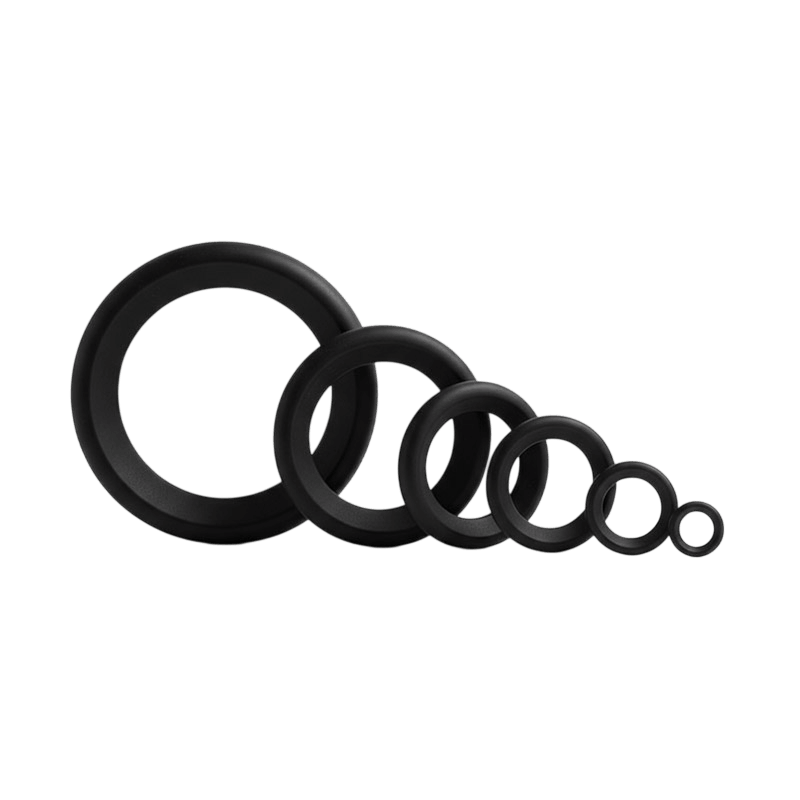
25% Carbon-Filled PTFE Gasket | Reinforced Grade for Higher Pressure and Improved Wear Resistance
A 25% Carbon-Filled PTFE gasket is engineered from a PTFE matrix reinforced with approximately 25% carbon particles. This formulation is selected when the exceptional chemical resistance of PTFE is required, but additional mechanical strength, stiffness, and dimensional stability under load are also critical. Compared with Virgin PTFE, Carbon-Filled PTFE exhibits reduced deformation under higher bolt loads and continuous service, making it a technically reliable choice for flanged joints and static sealing points operating under sustained mechanical stress.
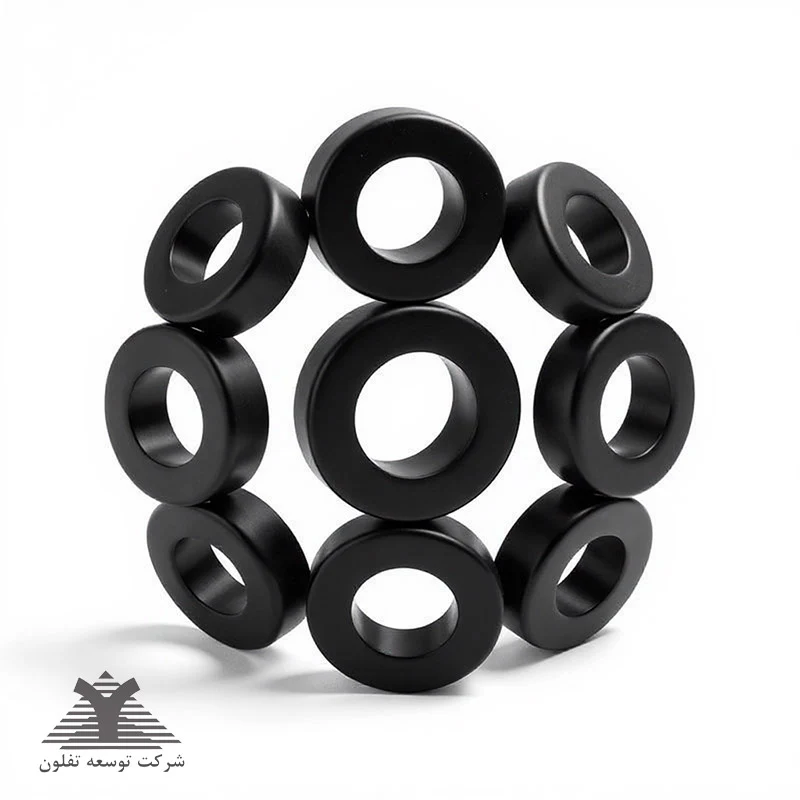
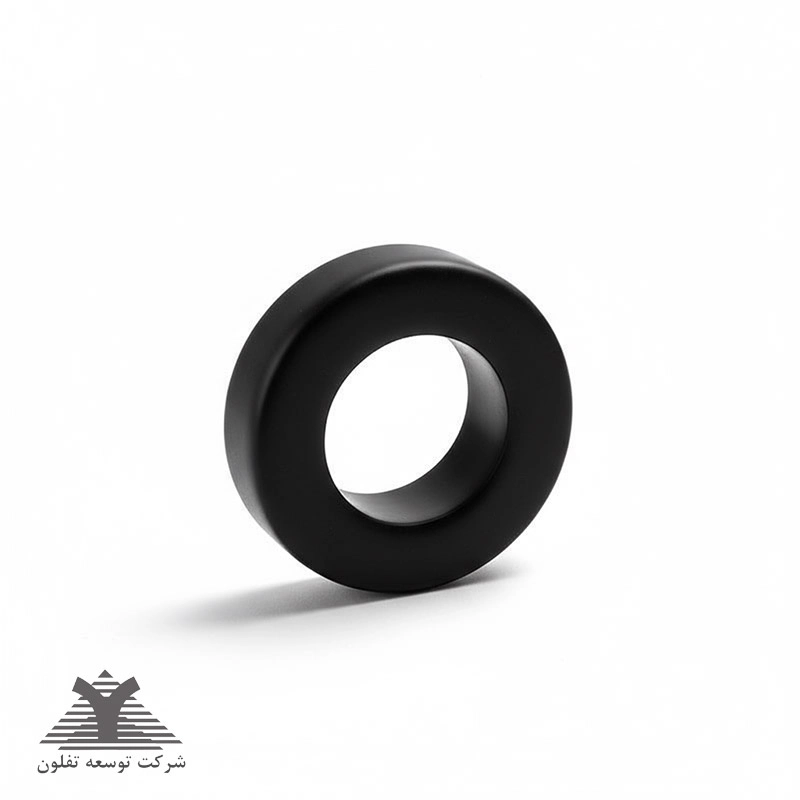
In applications where pressure is accompanied by moderate abrasion, vibration, or relative movement, 25% Carbon-Filled PTFE delivers a balanced performance profile. Positioned between Virgin PTFE and more rigid grades such as Bronze-Filled PTFE, this material is widely used across chemical process lines, general industrial services, and medium- to high-pressure hydraulic systems. Its ability to balance mechanical strength, creep resistance, and chemical compatibility makes 25% Carbon-Filled PTFE one of the first sealing materials engineers evaluate when selecting a PTFE-based gasket grade for demanding service conditions.
Technical and Key Specifications of 25% Carbon-Filled PTFE Gasket
- • This grade is manufactured from polytetrafluoroethylene (PTFE) reinforced with approximately 25% carbon filler.
- • The carbon-filled structure significantly increases stiffness and mechanical strength compared with Virgin PTFE.
- • Engineered for medium to relatively high-pressure flange connections and industrial sealing points.
- • Exhibits reduced creep deformation under sustained loads, providing more dimensional stability than pure PTFE.
- • Retains a substantial portion of PTFE’s inherent chemical resistance, making it suitable for a wide range of industrial process fluids.
- • Delivers stable performance in applications involving moderate wear, vibration, or relative movement between surfaces.
- • Commonly used in hydraulic systems, chemical process lines, and general industrial equipment.
- • Can be machined or cut to standard or fully custom dimensions based on project requirements.
- • Higher density and hardness compared to Virgin PTFE, supporting the use of higher bolt torque values.
- • A core candidate for projects that require a balanced combination of chemical resistance and elevated mechanical strength, making it one of the primary grades evaluated during gasket selection.
Advantages and Limitations of 25% Carbon-Filled PTFE in Sealing System Design
25% Carbon-Filled PTFE occupies a performance tier between Virgin PTFE and more rigid, high-strength grades such as Bronze-Filled and PEEK.
It is selected when the application requires the chemical neutrality of PTFE, yet demands greater mechanical stability under pressure.
Understanding the strengths and limitations of this material helps determine when choosing a 25% Carbon-Filled PTFE gasket is the most technically sound decision.
Advantages – Why 25% Carbon-Filled PTFE Is a Preferred Choice Among Engineers
Limitations – When a 25% Carbon-Filled PTFE Gasket Is Not the Ideal Choice
Comparison: 25% Carbon-Filled PTFE vs. Other PTFE Gasket Grades
The 25% Carbon-Filled PTFE gasket is widely regarded as an “engineering baseline grade” across many industrial environments—offering a balanced midpoint between the softness of Virgin PTFE and the rigidity and cost of heavily reinforced composites. The table below positions this grade within the broader PTFE family based on its design intent, pressure capability, fluid complexity, and practical usability.
| Gasket Grade | Role in System Design | Target Pressure Range | Complexity of Fluid Service | Flexibility for Stocking / General Use | Approximate Cost Level | Recommended Engineering Viewpoint |
|---|---|---|---|---|---|---|
| Virgin PTFE Gasket | Baseline grade for maximum purity and chemical inertness | Low to moderate | Highly corrosive, ultra-clean, and hygienic media | Suitable for defined applications, not necessarily universal | Medium | Select when the primary priority is chemical resistance and hygienic performance, rather than high mechanical loading or elevated pressure. |
| Carbon-Filled PTFE Gasket (25% Carbon) — This Product | General-purpose engineering grade for moderate to moderately high pressures | Medium to moderately high | Typical industrial fluids with controlled corrosivity | Highly suitable as a standard stocking grade | Medium to high cost | A logical choice when you want balanced mechanical performance and chemical resistance at a reasonable cost, making it an excellent universal grade for a wide range of industrial applications. |
| 25% Glass-Filled PTFE Gasket | Greater focus on stiffness and dimensional stability under sustained load | Medium | Chemical process fluids with medium to high corrosivity | Best suited for flanges that are tightened once and expected to operate for long periods without re-torquing | Medium to high cost | Ideal when long-term stability under constant pressure matters more than dynamic performance; a strong choice when seal longevity and creep resistance are priorities.
|
| 40% Bronze-Filled PTFE Gasket | Specialized grade engineered for high-pressure service and high bolt-torque sealing | High; suited for heavy mechanical loading and pressure-class flanges | Heavier industrial process media, commonly in oil, gas, and petrochemical units | Typically selected only for defined, high-criticality sealing points rather than broad, general-purpose inventory | High cost | Use this grade when the flange design falls within high-pressure classes and mechanical load capacity is more critical than versatility—ideal where sealing reliability under severe torque and pressure outweighs the need for a universal PTFE option. |
| Bronze + MoS₂ Filled PTFE Gasket (Bronze–Molybdenum Disulfide Composite) | Specialized composite for high pressure combined with significant wear, vibration, and dynamic motion | High to very high; optimized for mechanically aggressive, dynamic sealing environments | Industrial process media in heavy-duty and dynamic service (hydraulic oils, process gases, chemically active fluids) | Primarily intended for fully critical sealing points — not recommended as a broad inventory grade | High | Select this composite grade when pressure is high and vibration, sliding motion, or dynamic loading are substantial. Ideal when conventional PTFE, glass-filled, or standard bronze-filled grades cannot maintain long-term sealing integrity under combined mechanical and tribological stress. |
| PEEK-Based Gasket (Premium High-Performance Polymer) | Premium-grade engineering material for sealing at the upper boundary of temperature and pressure design limits | Very high; suited for combined extreme thermal and mechanical loading where conventional polymers fail | Highly complex, sensitive, or safety-critical process conditions | Used only in limited, high-risk points — not a warehouse-standard or general-purpose inventory grade | Very high | Choose a PEEK-based gasket when a sealing failure could lead to severe safety risks, environmental impact, or major financial loss, and when all other PTFE-based or composite grades cannot provide the required safety margin under extreme operating conditions. |
Industrial Applications of 25% Carbon-Filled PTFE Gaskets
A 25% Carbon-Filled PTFE gasket is selected for environments where operating pressures exceed normal PTFE limits, light-to-moderate wear and vibration are present, and chemical compatibility with PTFE is still required. Across many process industries, this grade serves as a balanced option—offering improved mechanical strength, predictable deformation under load, and stable sealing performance. For these reasons, it is often one of the primary engineering candidates when evaluating and specifying a PTFE carbon-filled gasket based on performance, durability, and total cost efficiency.
General Chemical Process Lines
Suitable for flanges and process connections in chemical units handling mildly to moderately corrosive industrial media.
Paint, Resin, and Organic Solvent Production Units
Appropriate for transfer lines carrying paints, resins, and organic solvents where both moderate pressure and reliable chemical resistance are required.
Industrial Hydraulic Systems (Medium to High Pressure)
Used in manifolds and flanges within hydraulic circuits where stable sealing under continuous pressure is critical.
Heat Exchangers and Industrial Oil Circuits
Applied in connections exposed to industrial oils and process fluids operating at elevated temperatures and pressures.
Industrial Water Treatment and Effluent Systems
Effective for flanges and fittings in treatment units that handle process liquids and various chemical solutions.
Collectors and General Flanges in Process Plants
A practical choice for multiple service points requiring a standard, reliable, and warehouse-friendly 25% Carbon-Filled PTFE gasket grade.
Frequently Asked Questions About 25% Carbon-Filled PTFE Gaskets
A 25% Carbon-Filled PTFE gasket is produced by blending a PTFE matrix with approximately 25% carbon as a reinforcing filler.
The carbon addition significantly increases stiffness, compressive strength, and long-term dimensional stability under load. Virgin PTFE, by contrast, is softer, more prone to creep, and not ideal for high bolt loads or elevated pressures.
When your application requires both chemical resistance and higher mechanical strength, a 25% Carbon-Filled PTFE gasket often becomes a preferred engineering-grade option.
This grade is recommended when the system operates under moderate to moderately high pressure, involves light to moderate wear or vibration, and handles mildly to moderately corrosive industrial media.
Typical examples include:
• General chemical process lines
• Industrial hydraulic circuits
• Heat exchangers and industrial oil systems
• Manifolds and flanges operating under continuous load
If your flanges are continuously in service and you want to avoid early deformation or creep failure, selecting a Carbon-Filled PTFE gasket is a technically sound decision.
This grade retains a substantial portion of PTFE’s chemical resistance, but it is not the optimal choice when:
• The process fluid is extremely corrosive
• The application demands maximum purity (e.g., certain pharmaceutical or high-purity food lines)
In such environments, Virgin PTFE remains the safer and more compliant option.
Before specifying a Carbon-Filled PTFE gasket in high-corrosion or hygienic service, the chemical compatibility, process conditions, and regulatory requirements must be reviewed in detail.
Although more expensive than basic gasket materials, this grade typically delivers a strong performance-to-cost ratio in industrial service.
It becomes economically favorable when:
• The system operates at meaningful pressure
• Reducing leakage and maintenance downtime is critical
• Higher-end grades such as Bronze-Filled PTFE or PEEK would be unnecessarily costly
In many facilities, this grade is considered a cost-effective engineering upgrade, providing better durability and sealing reliability without moving to premium composite materials.

